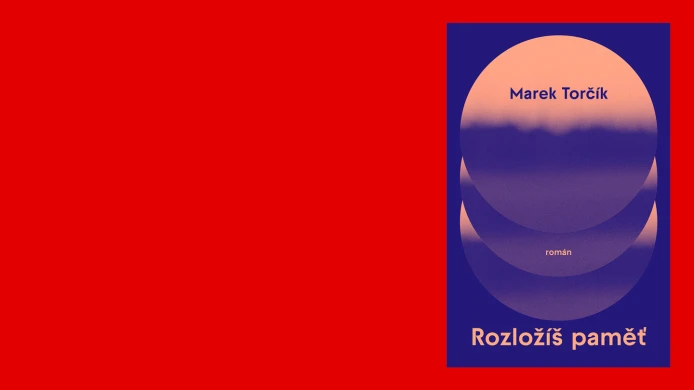
Susanna Roth Prize 2024: You will break down memory

For the 10th edition was selected text from the book by Marek Torčík, You Will Disassemble Memory (published by Paseka, 2023), which won two prestigious awards (Magnesia Litera and Jiří Orten Award 2024) for its prose debut. The competition was announced through local Czech Centres and embassies in the countries: Bulgaria, Egypt, Croatia, Italy, Japan, Lithuania, Hungary, Poland, Romania, North Macedonia, Slovakia, Slovenia, Serbia, Ukraine, Great Britain, and Vietnam; and for the language areas: Germany, Austria, Switzerland together for German, and Belgium, France together for French.
A total of 83 translators submitted competition texts. Poland shone with a record participation (32 translations!). The evaluation of the competition in individual countries or announced language areas was the responsibility of local Czech Centres and embassies, which established expert juries.
For the laureates, a program was prepared in the Czech Republic including networking, translation seminars, lectures, and cultural events . A meeting with the author of the text, Marek Torčík, also took place in Prague, and the program in Brno was held as part of the Bohemistics seminar organized from July 15 to 19, 2024, by the Moravian Regional Library.
About the author
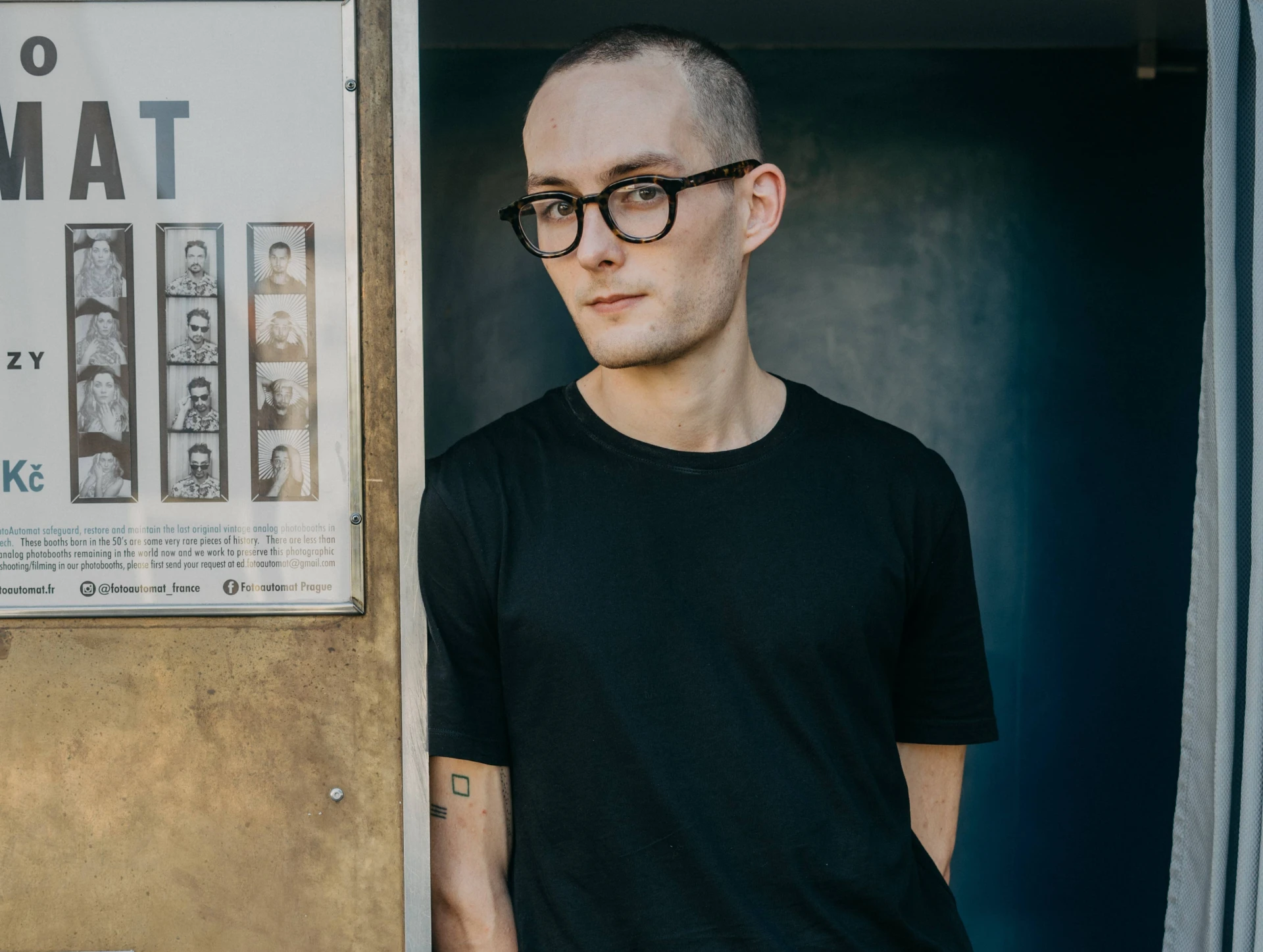
Marek Torčík (*1993) is a poet, writer, and journalist. He comes from Přerov, lives in Prague, where he also studied Anglo-American literature and culture at Charles University. In 2016, his poetry collection Rhizomes was published, and since then he has primarily published prose and poetry in magazines. In 2018 and 2020, he was one of the ten finalists in the Czech-Slovak competition Poetry SK/CZ. You Will Disassemble Memory is his novel debut.
Winning translators
In the 10th edition of CSR, the winners were Martyna Porucznik from Belgium (Francophone area), Eva-Maria Raykova from Bulgaria, Hadír Taha from Egypt, Marta Böhm from Croatia, Matteo Annecchiarico from Italy, Szymon Juraszek from Poland, Andrei Săndulescu from Romania, Izabela Karelová from Slovakia, Karin Pajk Muzaferija from Slovenia, Lea Gafner from Switzerland (German-speaking area), Olha-Anastasiia Futoran from Ukraine, and Samuel Dix from Great Britain. No award was given in Japan and North Macedonia.
Belgium – Martyna Porucznik (*2004)
She was born and lives in Brussels, but her parents come from Poland. She is a student of bachelor's studies in Slavic studies at the Faculty of Literature, Translation, and Communication at the Free University of Brussels, majoring in Czech and Russian. In the summer of 2023, she completed a month-long intensive Czech course at the Summer School at Charles University in Prague, and she plans to return there this summer. She has always enjoyed learning foreign languages and is currently improving primarily in Czech, Russian, and Spanish. She is interested in literature and history, especially the history of Slavic countries.

Bulgaria – Eva-Mariya Raykova (*1991)
She was born in Sofia, where she graduated from the Secondary School of Ancient Languages and Cultures. She studied art history in Scotland and then European Studies at New Bulgarian University. Currently, she works as a journalist, writing political reports and is a parliamentary correspondent. She is interested in Czech culture, especially literature and cinematography. She began learning Czech at the Czech Centre in Sofia and has participated in the Summer School of Slavic Studies in Olomouc twice. She hopes to use Czech professionally in the future.

Egypt – Hadír Taha (*1996)
She graduated from the Faculty of Languages at Ain Shams University in Cairo, majoring in Czech and English. During her studies, she received a five-month scholarship to Charles University in Prague, where she focused on Czech for foreigners. She worked as a call center operator for Teleperformance and is currently in the role of RTA (Real Time Analyst). Since childhood, she has loved fairy tales, short stories, and novels, and she is educating herself by reading Czech literature.

Croatia – Marta Böhm (*1999)
She comes from Zagreb, where she is studying Czech language and literature and computational linguistics in a master's program at the Faculty of Arts. She graduated from IV. Gymnasium, a bilingual school in English. She has been studying Russian for eight years. In addition, she works in an e-sports arena and in an escape room, but her dream has always been to work in a library. In her free time, she enjoys reading; her favorite Czech book is Bohumil Hrabal's Too Loud a Solitude. She also enjoys photographing life around her, drawing, or sewing. The translation of an excerpt from Marek Torčík's book was her first serious translation, and she hopes there will be many more in the future.

Italy – Matteo Annecchiarico (*1995)
He graduated from La Sapienza University in Rome, studying Slavic languages in the field of "Linguistic, Literary, and Translation Studies." He is currently in the third year of an international doctoral program in Germanoslavistics in co-tutelle between La Sapienza University in Rome and Charles University. He focuses on the comparative analysis of translations by Jan Zábrana, thus gaining deep insights into translation theories. He has translated texts by some contemporary Slovak writers and poems by significant Ukrainian authors (Serhiy Zhadan, Lina Kostenko). He is currently involved in translating texts for the first Italian anthology of Czech author Petr Borkovec.

Poland – Szymon Juraszek (*1994)
He graduated in Czech studies in 2019 from the Silesian University in Katowice. During his studies, he focused particularly on the works of Czech decadents and the influence of the classical Gothic novel on contemporary Czech literature. His favorite author is Jiří Karásek ze Lvovic, whose works he translates for his own use. He works in the contract management department of a German company, yet he strives to maintain constant contact with Czech and expand his language skills. In 2023, he completed a training program for court translators and interpreters at the Faculty of Law of Masaryk University. He is a lover of cats, computer games, and cooking.

Romania – Andrei Săndulescu (*2002)
He is a student at the Faculty of Foreign Languages and Literatures in Bucharest in the Department of Philology, majoring in Czech and Russian. Since childhood, he has had a passion for foreign languages; he chose to study Czech because he was attracted to the culture and way of life of people in the Czech Republic. Last year, he attended courses at the Summer School in Olomouc. His goal is to communicate perfectly with native speakers and be able to read a book in the original Czech - but there is still a long way to go.

Slovakia – Izabela Karelová (*1996)
She is a freelance translator and interpreter. She comes from Bratislava and studied translation and interpreting at the University of Vienna. In addition to Slovak and Czech, she speaks English, German, and Russian. She primarily focuses on professional translation and interpreting for European institutions, but she has always been drawn to literature. The Susanna Roth Award is her first experience with literary translation and, as she hopes, also the first step towards fulfilling her dream of translating books.

Slovenia – Karin Pajk Muzaferija (*1990)
She is a translator and teacher of foreign languages. She comes from Ljubljana, where she studied at the Faculty of Arts in Czech and French language and literature. During her studies, she also improved her language skills through exchange programs in Brno, Prague, and Toulon. Languages have always been her passion, and after her studies, she began to work professionally in translation. In 2016, she won first prize in a literary translation competition for her translation of an excerpt from Irena Dousková's book (Darda). Currently, she translates for various online shops and also teaches French, English, and Slovenian to foreigners.

Switzerland – Lea Gafner (*1996)
She works as a German teacher for foreigners and enjoys teaching migrants from all over the world her mother tongue. She studied Slavic studies and linguistics. She learned Czech during her studies, both at the University of Zurich and during short stays in the Czech Republic. She is interested in Czech and Slovak folklore and occasionally translates texts from Czech to German for her own enjoyment. She lives in Switzerland near Bern.

Ukraine – Olha-Anastasiia Futoran (*1995)
She was born in Lviv, where she studied Czech and Ukrainian philology at Ivan Franko National University after graduating from high school. She then enrolled in a master's program in Czech and Ukrainian philology at Palacký University in Olomouc, which she completed in 2020. She currently lives in Prague and works as a Czech language lecturer, interpreter, freelance translator, and intercultural worker.

Great Britain – Samuel Dix (*2001)
He studies Czech and Russian at the University of Bristol. He started learning Czech to get to know his Czech godmother and her children better. Over time, he became more familiar with Czech history and literature, specifically with stories from the fin de siècle period (including the works of Jiří Karásek ze Lvovic) and also with the novels of Milan Kundera, thus finding a strong motivation to study Czech. In the future, he would like to work as a translator of both old and new Czech literature.