Susanna Roth Prize 2020: Extracted Landscape

Veronika Bendová – Extracted Land (Fra, 2019)
Czech Central Highlands, Litvínov, Most, Libkovice, Ore Mountains, Ústí nad Labem, Hrob... A pair of protagonists searches for film locations in a land from which everyone has taken what they could. But sometimes you come to seek gloomy places, and instead, you encounter unexpected beauty. Traces in time that still speak to you, old grievances, old memories, old love. An unconventional road movie about how life rarely goes as it does in the movies. Starring Northern Bohemia.
Participation in the competition
Participating territories: Belarus, Bulgaria, France, Croatia, Italy, Japan, Lithuania, Hungary, Germany, Poland, Austria, Romania, Russia, North Macedonia, Ukraine, and the United Kingdom.
Number of received translations: 104 The best translations are carefully judged by selected expert juries in each participating country. Translators receive a trip to the Czech Republic, where they will participate in a translation workshop in Prague and a Bohemistics seminar organized by the Moravian Library. The program was postponed to 2021 due to the pandemic, but the group of winning translators will meet with the organizers virtually at least twice in the summer and listen to an online lecture on a selected literary topic.
The greatest interest in the competition was in Poland, Russia, Germany, and Ukraine. Thanks to selected diplomatic offices of the Czech Ministry of Foreign Affairs, the competition also took place in territories where the Czech Centre does not have its foreign representation – in Croatia and Lithuania.
About the author
Veronika Bendová was born in 1974 in Prague. She studied screenwriting and dramaturgy at the FAMU in Prague. She made her literary debut in 2012 with the novel Nonstop Euphrates, which was subsequently translated into Spanish. She occasionally publishes short stories in magazines.
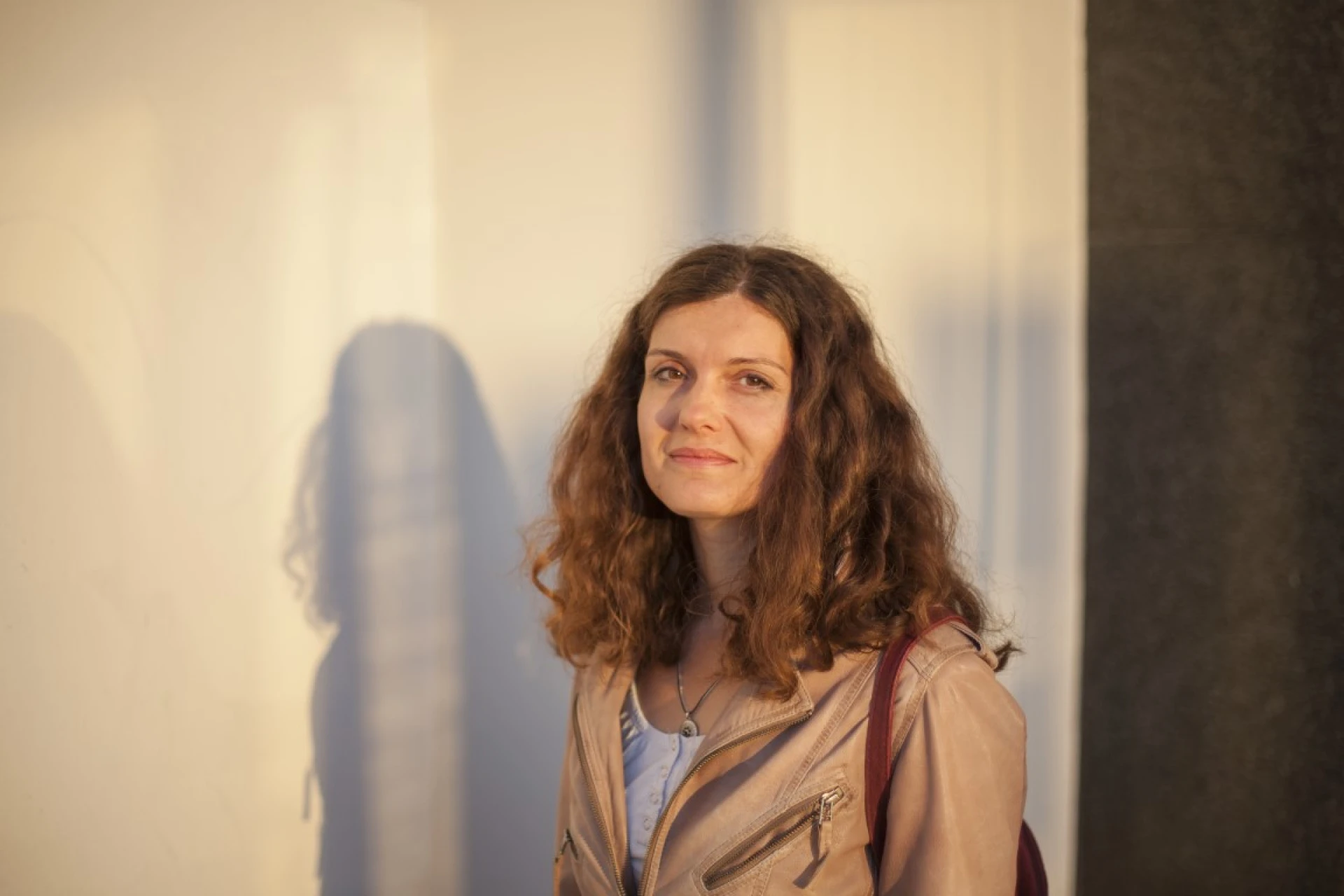
Award-winning translators
Bulgaria – Katerina Stoyanovová (*1998)
She was born in Sofia. In 2017, she graduated from the Classical Gymnasium (NGDEK). Immediately after graduation, she began studying Slavic studies at Sofia University. In 2019, she received a scholarship for the Summer School of Slavic (Bohemistic) Studies in Brno. In October 2019, she participated in the Competition for Young Translators as part of the Seventh Bohemistics Forum and won first prize for her translation of an excerpt from the novel Hana by Alena Mornštajnová. She speaks English and Czech.

France – Benjamin Hildenbrand (*1981)
He was born in Toulouse. He studied history at the Université de Lorraine and then French as a foreign language at Université Stendhal Grenoble. During his studies, he participated in an Erasmus exchange at the Faculty of Arts of Palacký University in Olomouc. He then worked for three years in Hradec Králové at the Božena Němcová Gymnasium and for the last year also at the local Faculty of Education. Since 2010, he has been working in the Czech-French section of the Slavic Gymnasium in Olomouc as a history and geography teacher. Since 2011, he has been teaching French at the Department of Romance Studies at FF UP, where he is currently also in the final year of his doctoral studies in French literature. His hobby is translating fiction. In 2015, he won the first Václav Černý Prize in the category of Czech-French translation, and the following year he won second prize.

Croatia – Martina Karačić (*1995)
She was born in Zagreb. She is a master's student of Bohemistics and art history. In Bohemistics, she focuses on translation and has a great interest in Czech literature. In art history, she deals with heritage conservation. She is currently on a two-semester study stay as part of the Czech for Foreigners Cabinet at the Faculty of Arts of Masaryk University in Brno. Last year, she participated in a project for a thematic issue of the literary magazine Artikulacije , titled Young Czech Short Story , in which she translated the short story "Denisa" by Radovan Menšík.

Italy – Elisa Bin (*1993)
She was born in northeastern Italy. She graduated with a master's degree in Czech and Russian language from the University of Udine. In 2017, after participating in a university project focused on literary translation, she translated poems by Petr Hruška for the literary magazine Fare Voci . In the same year, these poems were published by the Qudu publishing house. She later spent three semesters at Masaryk University in Brno. After returning to Italy, she completed her studies at the University of Udine with a thesis on the works of Zbyněk Hejda. She currently lives in Brno and works as an Italian language lecturer. In her free time, she enjoys reading, writing, and studying languages.

Japan – Minami Toyoshima (*1994)
She was born in Yokohama. In 2017, she graduated from a bachelor's program in Russian and East-Central European Studies at the University of Tokyo. After her bachelor's studies, she continued at the same university in a master's program in contemporary literature. From September 2018 to the present, she has been studying under an intergovernmental exchange program at the Faculty of Arts of Charles University. In addition to her studies in Prague, she participated in the Summer School of Slavic Studies in Olomouc and České Budějovice. She speaks Czech, English, and Russian. During her stay in Prague, she became interested in Czech theatre and theatre studies and is now researching the plays of Václav Havel. The bond between her and Czech culture is music. Dvořák's music attracted her at the age of 14, and since then she has dreamed of living in the Czech Republic. She plays the viola and is currently a member of the Choir and Orchestra of Charles University. She will continue her studies at the Faculty of Arts of Charles University in a master's program and would like to focus on translating from Czech to Japanese.

Lithuania – Elena Giniotytė (*1988)
She was born in Lithuania. After finishing high school, she went to study for her bachelor's degree in Bristol, UK. In 2011, she graduated from the Faculty of Modern Languages at the University of Bristol, majoring in Russian. She started studying Czech at the University of Bristol and in 2010 studied Czech at Masaryk University in Brno during a study stay. In 2011, she also participated in a summer language school at the University of South Bohemia in České Budějovice. After finishing university, she worked as a business consultant in London and on the island of Mauritius. In 2020, she returned to Lithuania and hopes to continue studying Czech and translating Czech literature into Lithuanian.

Hungary – Bianka Boda (*1993)
She has been in close contact with the Czech language since childhood. Since 2012, she has lived in Budapest, where she was drawn by her university studies in art history at Eötvös Loránd University. After her bachelor's studies, she continued at the master's level in ethnography. Here she first tried her hand at being a translator when she translated the outlines of ethnographic and historical studies from Hungarian to Slovak, which were published in a guide issued by the Department of Ethnography. During her studies, she worked at the Slovak Institute in Budapest, where she became more familiar with the field of culture, event organization, and also worked on translations. One of them was a translation of an excerpt from the first book of Slovak author Tomáš Hučko, which was published last year at the International Book Festival in Budapest. Since spring 2019, she has been working as a museologist at the Museum of Fine Arts in Budapest, in the department of foreign art after 1800.

Poland – Aleksandra Wójcik (*1996)
She is a student of Slavic studies at the Institute of Slavic Philology at Jagiellonian University in Krakow. She fell in love with Czech through Czech architecture, especially Cubism and interwar Functionalism. She is interested in architecture and urban planning across Central Europe and the Balkans. In addition, she deals with the grammar of Slavic languages – she is the author of an article on the possibility of isolating a new verbal pattern in Czech. She is writing her thesis on the history of Slavic Esperanto.

Austria – Ferdinand Hauser (*1995)
He was born in Halle (Saale), Germany. He studied West Slavic studies with a focus on Czech at the University of Leipzig and Charles University in Prague. He completed internships in the Chamber of Deputies of the Parliament of the Czech Republic, at the Goethe Institute in Prague, and at the Bavaria Bohemia Centre in Schönsee, Bavaria. He is currently studying translation in literature, media, and art at the University of Vienna, where he has permanent residence. He is the author of a guide to the Czech capital, a member of the Czech-German Discussion Forum, and is also involved in film – together with Conrad Winkler, he made the documentary Die letzte erste Tanke | The First and Last Pump, which portrays life at two gas stations on both sides of the Czech-German border. If he is not traveling or involved in theatre, he can be found in Prague pubs – specifically in the Czech-Viennese pub Nachtasyl.

Romania – Darina-Andrada Cepreaga (*1997)
She was born in Bîrlad. She studied Czech and Russian at the Faculty of Foreign Languages and Literatures in Bucharest. During her studies, she traveled to the Czech Republic through the Erasmus program, where she improved her Czech language skills and gained new knowledge about the language. She works in finance with active use of the Czech language. In her free time, she enjoys translating Czech literature into Romanian, drawing, and visiting new places. Since she started studying Czech, she has enjoyed translating. In 2018 and 2019, she won first prize in the faculty translation competition for translating literary texts from Czech to Romanian. She has also participated in several events as an interpreter. Since childhood, she has loved drawing and creating. She constantly strives to fulfill her dreams.

Russia – Tatjana Careva (*1984)
In 2007, she graduated from the Faculty of Philology at Nizhny Novgorod State University. She had Czech as a minor, focusing on aspects of Czech syntax. She fell in love with the Czech language. She has participated in language internships at Charles University, Masaryk University, and Ostrava University. She worked at the Honorary Consulate of the Czech Republic in Nizhny Novgorod as an assistant and translator. For over 10 years, she worked in manufacturing companies, also as a translator. She has also participated in Czech private medical, educational, and cultural projects as an interpreter. She currently works freelance, focusing primarily on legal and financial translations from Czech. Participation in the Susanna Roth Prize competition is her first attempt at literary translation.

Ukraine – Tetiana Kovalenko (*1987)
She was born in Donetsk. In 2009, she graduated with a master's degree from the Faculty of Philology at Donetsk National University. In 2012, she completed her doctoral studies in the history of Ukrainian literature. In 2013 she defended her doctoral dissertation on Ukrainian formalism. She participated in the Scholarship Program of the Government of the Republic of Poland for Young Scientists in 2011-2012 and further scientific internships at the Faculty of Artes Liberales at the University of Warsaw in 2013. She worked at the Institute of Foreign Languages in Horlivka, also as a copywriter, was a lecturer of Ukrainian and Polish, taught Ukrainian at the Ukrainian Saturday School in Warsaw, and last but not least, was a lecturer of Ukrainian for foreigners at the Ukrainian House in Warsaw. In 2017, she graduated from the Study of Eastern Europe at the University of Warsaw, where she defended her thesis on unofficial Czech literature of the 1950s based on the example of the edition "Midnight." United Kingdom – James Saldanha (*1997)

Great Britain – James Saldanha (*1997)
He was born in London, where he grew up and went to school. He began studying Czech in 2017 in the second year of his bachelor's degree in German and Russian at the University of Bristol in England. In 2018, he received the Faculty of Modern Languages Award, and in 2019, he was awarded a scholarship from the Czech Ministry of Education, Youth and Sports for the Summer School of Slavic Studies at the University of South Bohemia in České Budějovice. He is now completing his final year of study in Bristol, where he is the chairman of the local section of the European student organization Erasmus Student Network. His studies will conclude in the summer of 2020. This is his first participation in the translation competition Susanna Roth Prize.
